

Description
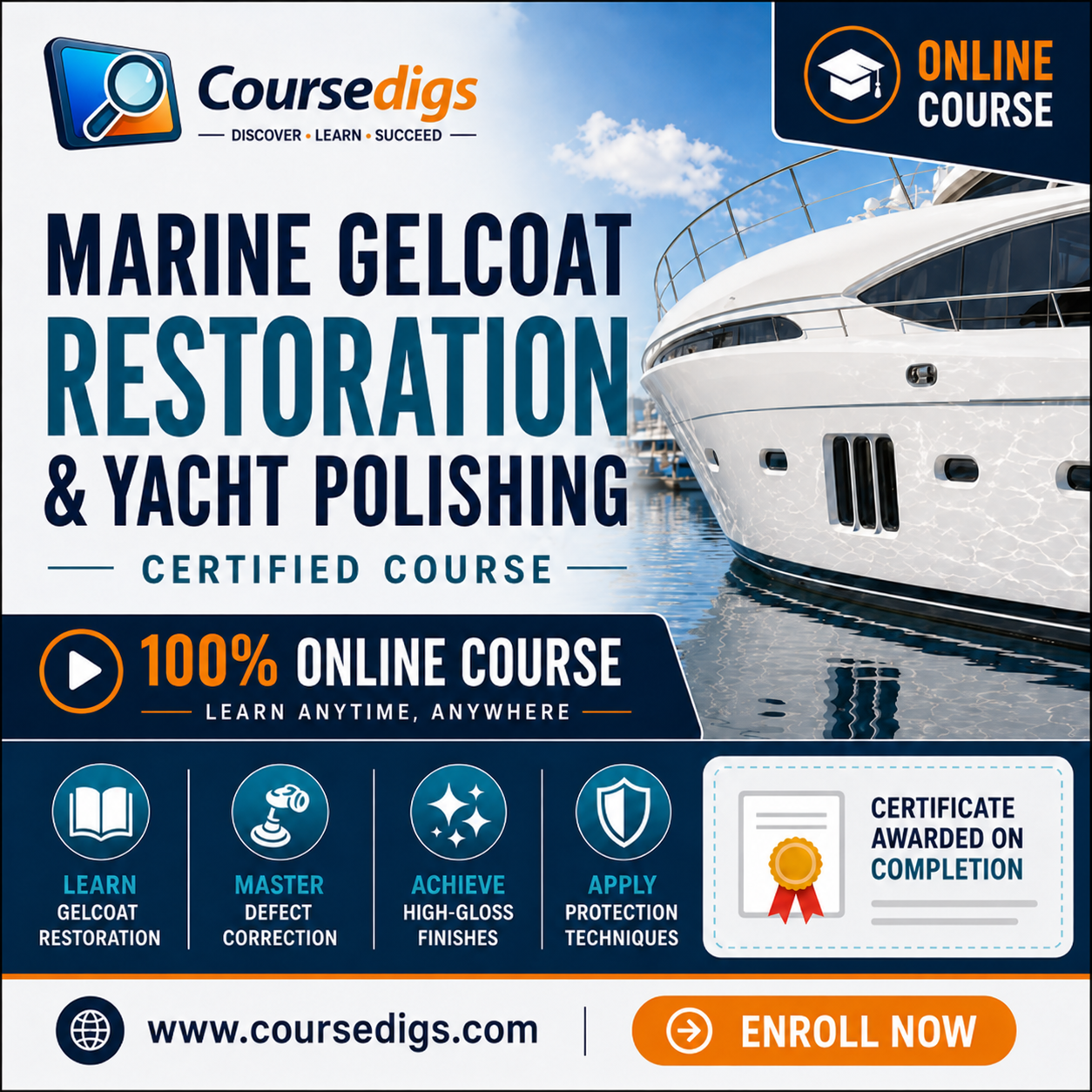
Start your career in marine gelcoat restoration, yacht polishing, and professional marine detailing with this practical certification programme. The Marine Gelcoat Restoration & Yacht Polishing Certification teaches learners how to restore oxidised gelcoat, correct surface defects, polish yacht surfaces to a high-gloss finish, and protect marine surfaces using professional tools, techniques, and protection systems.
This Coursedigs.com Professional Certification Programme is designed to take learners from beginner level through to industry-ready competence in gelcoat correction, restoration, polishing, and yacht finishing. It provides a clear, practical training pathway for anyone who wants to work in marine detailing, yacht care, boat maintenance, marina services, or start a specialist marine polishing business.
This is not a basic boat cleaning course. It is a professional marine surface finishing programme covering gelcoat systems, oxidation removal, machine polishing, defect correction, wet sanding awareness, gloss enhancement, UV protection, waxes, sealants, coatings, client communication, pricing, and business operations. The course is written to be internationally adaptable, with no country-specific assumptions about products, currency, marinas, or local regulations.
Estimated duration: 6–10 hours
Level: Beginner to Professional
Outcome: Industry-ready competence in gelcoat correction, restoration, polishing, protection, and yacht finishing.
Career opportunities this course can support include:
- Marine detailing technician
- Yacht polishing specialist
- Gelcoat restoration technician
- Boat maintenance assistant
- Marina service worker
- Boatyard finishing technician
- Yacht care and maintenance specialist
- Marine surface correction operator
- Mobile boat detailing business owner
- Superyacht detailing support technician
- Charter fleet maintenance worker
- Marine valeting and polishing contractor
Ideal for: beginners who want to start a career in marine detailing, existing detailers who want to specialise in yachts and boats, marina and boatyard workers, yacht crew, boat maintenance teams, mobile detailing operators, and entrepreneurs who want to build a professional marine polishing and restoration business.
What you will learn
Marine surface finishing foundations
- What gelcoat is and why it matters in marine construction
- The difference between gelcoat, paint, and automotive clear coat
- How gelcoat protects and improves the appearance of boats and yachts
- The protective and aesthetic role of professional yacht finishing
- How marine surface finishing differs from general cleaning
- International-quality expectations for yacht detailing and polishing
Marine surface types and common problems
- Fibreglass and GRP surface identification
- Painted hulls versus gelcoat hulls
- Composite materials and surface sensitivity
- Oxidation, fading, chalking, and UV degradation
- Scratches, swirl marks, haze, and surface dullness
- Waterline staining and environmental contamination
Tools, equipment, and product selection
- Rotary polishers, dual-action polishers, and forced rotation machines
- When to use each type of machine polisher
- Wool pads, foam pads, cutting pads, polishing pads, and finishing pads
- Grit levels, abrasive selection, and compound aggressiveness
- Heavy cut compounds, medium polishes, and finishing polishes
- Marine-specific product selection compared with automotive products
Cleaning and preparation chemicals
- Degreasers and surface preparation products
- Acid cleaner awareness for waterline staining
- Surface prep sprays and bonding preparation
- Product compatibility and safe application principles
- Correct chemical use before correction and protection
- Avoiding contamination that can affect polishing results
Safety and working environment
- PPE including gloves, masks, and eye protection
- Electrical safety around docks, marinas, and wet working areas
- Working safely at height and around vessel access points
- Slip, trip, and fall prevention on wet surfaces
- Tool handling and cable management
- Safe working habits for marina, boatyard, and dockside conditions
Surface assessment and job planning
- How to inspect gelcoat condition professionally
- Visual inspection techniques for marine surfaces
- Identifying light, medium, and heavy oxidation
- Detecting deep defects versus surface-level issues
- Knowing when restoration is possible and when repainting may be required
- Planning the correct correction approach before starting work
Professional risk assessment
- Thin gelcoat risks and restoration limitations
- Working safely around edges, corners, curves, and raised details
- Heat management during machine polishing
- Avoiding burn-through and surface damage
- Choosing the least aggressive effective method
- Managing customer expectations before work begins
Cleaning and surface preparation
- Pre-wash procedures for salt, dirt, and loose contamination
- Safe washing methods to avoid further damage
- Removing marine growth before polishing
- Tar, rust, waterline stain, and contamination removal
- Chemical versus mechanical cleaning decisions
- Surface readiness checks before polishing begins
Masking and protection
- Protecting fittings, rub rails, seals, hardware, and trim
- Tape selection and professional masking techniques
- Preventing compound staining and product residue
- Preparing complex yacht areas before correction
- Protecting neighbouring surfaces during machine work
- Final readiness checks before restoration
Gelcoat restoration and cutting stage
- Understanding oxidation removal at surface level
- Material removal principles and correction limits
- Machine polishing fundamentals for marine surfaces
- Pressure control, arm speed, pad angle, and pad contact
- Heavy cut compound selection
- Wool versus foam cutting methods
Multi-stage correction
- When multiple correction passes are required
- Progressive refinement from cutting to polishing
- Reducing haze and compounding marks
- Matching pads and compounds to surface condition
- Section-by-section restoration workflow
- Creating a consistent finish across large marine surfaces
Polishing and finishing
- Refinement stages after oxidation removal
- Removing haze, micro-scratches, and polishing marks
- Final polish selection for marine gelcoat
- Pad choice for gloss enhancement
- Achieving depth, clarity, reflection, and high-gloss finish
- Professional inspection standards before delivery
Gloss enhancement and final inspection
- How to judge reflection quality
- Light inspection techniques
- Identifying missed defects or uneven correction
- Final wipe-down and surface presentation
- Professional finishing standards for yachts and boats
- Customer-ready handover preparation
Protection and sealing
- Marine waxes and their role in surface protection
- Carnauba-based versus synthetic wax systems
- Polymer sealants and longer-lasting protection options
- Marine-grade ceramic coating awareness
- UV protection in marine environments
- Product selection for durability, gloss, and maintenance needs
Maintenance and aftercare planning
- Reapplication intervals for waxes, sealants, and coatings
- How to educate clients on aftercare
- Routine maintenance washing to preserve results
- Avoiding re-oxidation and premature finish failure
- Spot correction between major restoration jobs
- Seasonal care and storage considerations
Advanced techniques and problem solving
- Severe oxidation restoration
- Wet sanding fundamentals and grit progression
- When to escalate beyond polishing
- Isolated deep scratch correction
- Blending techniques for localised defects
- Working on small boats, yachts, superyachts, and complex surfaces
Environmental and site challenges
- Working in sun, wind, humidity, and changing marine conditions
- Dockside versus workshop polishing considerations
- Managing dust, heat, moisture, and product behaviour
- Adjusting workflow for outdoor marine environments
- Protecting results during variable weather
- Planning jobs around safe and practical working conditions
Professional workflow and efficiency
- Job sequencing for real-world yacht polishing work
- Section-by-section completion systems
- Time estimation and labour planning
- Scaling larger jobs effectively
- Working alone or as part of a crew
- Role allocation for team-based yacht detailing projects
Quality control and delivery
- Maintaining consistency across large hulls and topsides
- Final inspection before customer handover
- Creating professional before-and-after documentation
- Recording work completed and products used
- Managing finish expectations on older or damaged gelcoat
- Delivering professional results that support repeat business
Business, pricing, and client communication
- Pricing strategies for yacht polishing and gelcoat restoration
- Per-metre pricing versus full-job pricing
- Factors that affect cost including size, condition, access, and finish level
- Setting realistic client expectations
- Explaining limitations clearly and professionally
- Preparing quotes, inspection reports, and job documentation
Marine detailing business development
- Building a marine detailing or yacht polishing business
- Target markets including private owners, marinas, boatyards, yacht clubs, and charter fleets
- Upselling related services such as washing, protection, maintenance plans, and seasonal care
- Building trust through professional presentation and documentation
- Creating repeat income through aftercare and scheduled maintenance
- Positioning yourself as a specialist marine surface restoration provider
Advanced professional modules included
Severe oxidation and wet sanding awareness
- How to recognise severe oxidation
- When polishing alone may not be enough
- Wet sanding principles for advanced restoration
- Grit progression awareness
- Refining sanding marks safely
- Knowing when specialist experience or repainting is required
Yacht and superyacht finishing standards
- Professional finish expectations for high-value vessels
- Working carefully around luxury fittings and sensitive surfaces
- Managing large surface areas efficiently
- Achieving consistent gloss across curved and vertical panels
- Client communication for premium marine services
- Quality control for high-end yacht finishing work
Marina, boatyard, and mobile service operations
- Working professionally in marina and boatyard environments
- Dockside access planning and site safety
- Coordinating with vessel owners, captains, marina staff, and boatyard teams
- Mobile service setup for boat polishing and restoration work
- Managing equipment, power, water, and working conditions
- Building strong relationships with marine industry partners
Career and professional outcomes
By completing this certification, learners can develop practical skills suitable for:
- Entry-level marine detailing work
- Yacht polishing and gelcoat restoration services
- Boatyard and marina support roles
- Mobile boat detailing services
- Charter fleet maintenance support
- Private yacht and boat care services
- Seasonal marine maintenance work
- Starting an independent marine detailing business
- Expanding an existing detailing business into marine services
Complete course modules
- Introduction to Marine Surface Finishing
- Gelcoat Systems and Marine Surface Types
- Common Marine Surface Problems
- Tools, Equipment, and Product Selection
- Machine Polishers, Pads, Compounds, and Abrasives
- Cleaning and Preparation Chemicals
- Safety Equipment and Dockside Working Safety
- Surface Assessment and Job Planning
- Oxidation Classification and Restoration Decisions
- Risk Assessment and Heat Management
- Cleaning and Surface Preparation
- Decontamination and Waterline Stain Removal
- Masking, Protection, and Surface Readiness
- Gelcoat Restoration and Cutting Stage
- Machine Technique Fundamentals
- Heavy Cut Process and Multi-Stage Correction
- Polishing and High-Gloss Finishing
- Final Inspection and Reflection Quality Standards
- Protection, Waxing, Sealants, and Coatings
- UV Protection and Maintenance Planning
- Advanced Techniques and Problem Solving
- Wet Sanding Awareness and Severe Oxidation Restoration
- Professional Workflow and Efficiency
- Team Operations and Quality Control
- Business, Pricing, and Client Communication
- Marine Detailing Business Development
- Maintenance, Aftercare, and Seasonal Care
- Final Assessment and Certification
Certification
On successful completion, learners receive a Marine Gelcoat Restoration & Yacht Polishing Certification to demonstrate competence in gelcoat assessment, oxidation removal, machine polishing, surface correction, high-gloss yacht finishing, protection systems, safety procedures, client communication, and professional workflow planning.
The certification outcome is designed to support learners who want to enter the marine detailing industry, improve their professional credibility, work with marinas or boatyards, provide yacht polishing services, or build their own specialist marine restoration business.
Assessment includes
- Module quizzes to confirm understanding of key terminology and concepts
- Final multiple-choice exam covering gelcoat restoration, polishing, and protection
- Scenario-based problem-solving questions
- Oxidation severity and product selection decisions
- Risk management and surface assessment questions
- Practical workflow assessment option for advanced certification
- Digital certificate issued upon passing with verification ID
Upon completion, learners will be able to:
- Assess gelcoat condition professionally
- Identify oxidation, fading, scratches, chalking, and UV damage
- Select suitable machines, pads, compounds, and protection systems
- Perform full restoration from oxidation removal to finishing
- Use safe cutting, polishing, and refinement techniques
- Achieve high-gloss yacht and boat finishes
- Protect restored surfaces with waxes, sealants, or coating systems
- Communicate professionally with boat owners, marinas, and clients
- Price, quote, document, and deliver marine polishing work
- Operate or work within a marine detailing or yacht maintenance business
Why this course works internationally
- Country-neutral training that applies globally
- No brand-locked tools, products, or equipment
- Suitable for marinas, boatyards, mobile services, and private vessel work
- Practical systems for beginners and working professionals
- Covers both technical restoration and business readiness
- Supports career entry, freelance work, and business development
- Focuses on professional finish quality, safety, client trust, and real-world workflow
Enrol now
If you want to start a career in marine gelcoat restoration, yacht polishing, or professional marine detailing, this certification programme provides a complete pathway from beginner to industry-ready professional.
Start today and build practical marine finishing skills that can support employment, freelance services, marina-based work, or your own specialist yacht polishing and gelcoat restoration business.


Reviews
There are no reviews yet.